




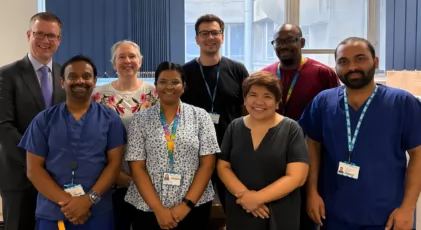
Led by Sina Yadollahi of the Faculty of Medicine – School of Cancer Sciences, University of Southampton with supervision by Professor Simon Crabb and Professor Stephen Beers.
A new drug combination (Enfortumab Vedotin with Pembrolizumab) is helping bladder cancer patients live longer, but it works better for some than others and doctors cannot yet predict who will benefit.
This project will use an advanced imaging method called QF-Pro® to study cancer and immune cell interactions in patient samples. The goal is to create the first test that identifies which patients are most likely to respond to the treatment, leading to more personalised and effective care.

This project has also been judged the winner of the annual ABC UK Andrew Meadows Award – this is a special recognition by the Panel, of the application from the shortlist which they feel is of particular interest and merit.
The Andrew Meadows Award
A special in memory research Award awarded to the project considered to be the outstanding project from the submissions to the annual IOPP grant round and is, in the view of the judging panel, most deserving of special recognition. This Award is in memory of Andrew Meadows, who sadly died from bladder cancer in 2018, and we thank Andrew’s family for their generosity in supporting vital research into bladder cancer.
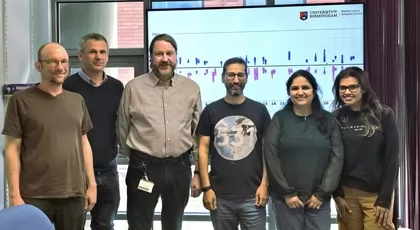
Led by Dr Anshita Goel (Bioinformatics Scientist), Dr Roland Arnold (Theme Lead for Bioinformatics and Genomics), Dr Douglas Ward (Theme Lead for Biomarker Research), and Professor Rik Bryan (Director) at the Bladder Cancer Research Centre, University of Birmingham.
Chromosomes have protective caps called telomeres, similar to the plastic tips on shoelaces. Ordinarily, telomeres become shorter as cells get older, the protection is lost, and the cells die. However, cancer cells sometimes hijack this process and activate TERT gene to repair their telomeres so that cell division can continue in an abnormal fashion. This TERT activation and telomere length maintenance can be indicators of how aggressive a cancer is and may lead to the possibility of new treatments. This project aims to measure bladder cancer telomere lengths and find out if this can be achieved non-invasively from a urine sample, and to translate these complex genomic findings into a practical, patient-centred diagnostic tool.
A core objective of this study is to translate these complex genomic findings into a practical, patient-centred diagnostic tool. The project will compare the genetic profiles of primary tumour tissues directly against paired patient urine samples. Using specialised bioinformatics pipelines, the researcher will determine whether bladder-cancer-specific telomere changes and pTERT mutations can be reliably captured through urine DNA.
If successful, this work will lay the foundation for non-invasive liquid biopsies, allowing clinicians to screen for aggressive disease variants and monitor treatment efficacy without the need for repeated, invasive procedures. Funded in alignment with Action Bladder Cancer UK’s mission, this project aims to bridge the gap between high-level genomic sequencing and accessible, painless clinical care.

Led by Dr. Vanesa Biolatti PhD, Research Fellow, Translational Radiobiology Group, Manchester Cancer Research Centre, University of Manchester; with Professor Ananya Choudhury, Dr Masar Radhi and Dr Ellen Slay.
Radiotherapy is used to treat muscle-invasive bladder cancer (MIBC) while preserving the bladder. However, some tumours develop "radioresistance” leading to treatment failure and tumour regrowth. To tackle this challenge, this project aims to develop a specialised test (a biomarker) to identify patients with radiation-resistant tumours before treatment begins.
Muscle-invasive bladder cancer (MIBC) carries a high risk of recurrence and a low five-year survival rate. While radiotherapy preserves the bladder, local recurrence remains a major challenge, often forcing patients to undergo toxic re-irradiation or radical surgery. Currently, clinicians lack validated biomarker tests to predict radiotherapy response because tumours are complex mixtures of radiation-sensitive and radiation-resistant cells. While traditional research focuses on fixed tumour traits, evidence shows that radiotherapy actually drives tumour evolution; as radiation kills sensitive cells, resistant clones adapt and expand. This study explores how radioresistance dynamically develops through interactions between the tumour’s internal programming and external microenvironmental pressures like oxygen deprivation (hypoxia) and tissue stiffening.
To map this evolution, the project utilises advanced laboratory techniques to analyse 2D and 3D MIBC cultures under simulated conditions of tissue stiffness and hypoxia. By combining these genomic datasets through sophisticated statistical modelling, the team aims to isolate precise genetic changes and filter out background noise to create a robust "biomarker signature" that flags resistant disease. This signature will be clinically validated using molecular data from large, established patient groups, including the BCON and Christie cohorts. Ultimately, this test will give doctors a reliable tool to predict radiotherapy response and recurrence risk, allowing them to match patients with effective, personalised therapies from day one.


UNDERSTANDING THE HIDDEN COSTS OF BLADDER CANCER PATIENTS
Led by Dr Elaine Tomlins, Nurse Consultant, Honorary Research Fellow University of East Anglia, Trust lead cancer nurse, The Royal Marsden NHS Foundation Trust.
This project investigates the hidden economic burden of bladder cancer within the NHS, where lifelong surveillance often leads to indirect costs like travel expenses and lost income for patients. A survey-based study will measure this financial toxicity to inform better support services and improve patient-centered care.
This research project aims to assess the prevalence and severity of financial toxicity among bladder cancer patients undergoing long-term, frequent surveillance within the NHS. Despite treatment being free at the point of delivery, patients face substantial hidden costs, yet there is currently very limited research exploring how this financial strain specifically impacts those with bladder cancer in the UK. This study evaluates how indirect factors like lost income and travel expenses affect overall quality of life to inform better patient-centred support services.
The study will be based on a survey to measure financial distress and identify the key contributors to this economic burden, such as employment changes, time off work, and transport costs. It will also test how well the holistic needs assessment tool works in practice to catch these problems early. This work supports Action Bladder Cancer UK in improving the everyday lives of patients.
Follow us:


